The Gartner LLM Hype Cycle Visualised
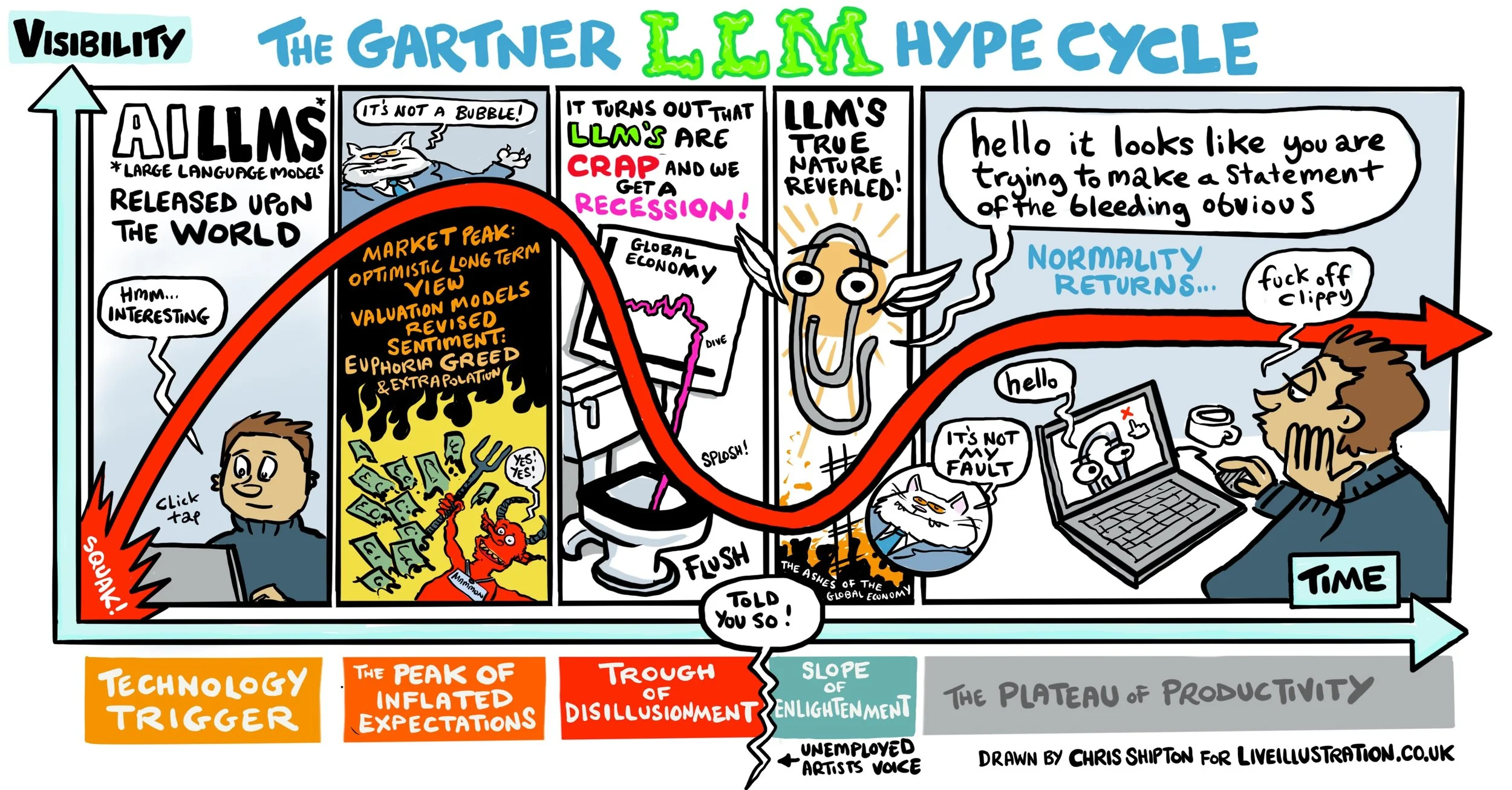
Invented by Jackie Fenn back in 1995 for Gartner the 'Hype Cycle' is a tool to demonstrate how humans overestimate the impact of a technology. This illustration has fused that concept with the journey to a recession.
Everyone and anyone has been told about the wonders of AI from every angle, day in, day out. One wonders if thats what having billions of investment capital buys you in PR.
And while anecdotal evidence suggests most normal people hate it, there is an unending level of hype around AI. We are to be thrilled by rendering jobs obsolete, an industry founded on copyright theft and dedication of billions of dollars to destroy the livelihoods of musicians and artist - to no discernible benefit to anyone.
That said those who are concerned with only one thing, share holder value, may also be in for a nasty surprise concerning the impacts of AI. That being.. losing a lot of money!
We are at top, or possibly sliding off the top, of the peak hype. Markets have concentrated investment in hyperscalers and chip manufacturers. A GDP distorting goldrush, particularly in the USA. Yet the excitement over building data centres and hogging memory chips is global.
We are, as a rapidly fragmenting global society, hurtling down the trough of disillusionment because actually… AI is a bit crap. You can look at the hard evidence of companies failing to find ROI in their investments. Or vibe coding outfits realising it's actually cheaper to pay for humans rather than tokens (and this is before any kind of enshittifying bait and switch on AI pricing models). Or you can simply use AI to find error ridden outputs, misleading statements. You could hop on LinkedIn to see a never ending stream of slop masquerading as genuine insight.
Cynics might say corporates in the know are reducing headcount not because of AI's productivity benefits, but as a way to sack people without spooking the markets on their financial health.
The point being... it probably wasn't really worth hoovering up that much global capital for. Subsequently the AI stock corrections will leave investors high and dry as their wealth evaporates overnight. And while the tiny violins will be out for the majority of them it will have an impact on normal people. As will the collapse in investment in data centres and other AI infrastructure impacts construction and manufacturing.
We are left to wonder now, and no doubt in the future, if the total failure of governments to protect the creative industries from the perils of AI was the right thing to do.
Maybe a more bullish protection of 'real' skills and creativity would - rather than stifle the productivity gains of AI - have prevented a bubble expanding that takes the creative industries out while it expands, and everyone else out when it pops?