Do’s and don’t of commissioning Illustration in the age of AI
In every aspect of working life business leaders are unable to complete a sentence without somehow referring to AI. The debate as to whether the costs of tokens will be viable in the long term is raging. The concerns about the environmental costs are being steadfastly ignored. And the quest to prove it is useful beyond a very advanced form of autocomplete continues.
In the world of Illustration there has been a notable shift. No one really dedicates themselves to the art of illustration expecting to become fabulously wealthy. But the impact of untold billions of venture capital being spent on tools to supplant the role of the illustrator in business and life have started to have a noticeable impact beyond a dwindling supply of work.
If you are part of an organisation which has fully adopted AI you may find that its current deficiencies lead to you wanting a human to create for you. But there are some important elements of best practice and basic respect that should not be overlooked when asking a sentient being to create artwork for you.
Here is a handy guide.
Do not under any circumstances run the artists work through an AI
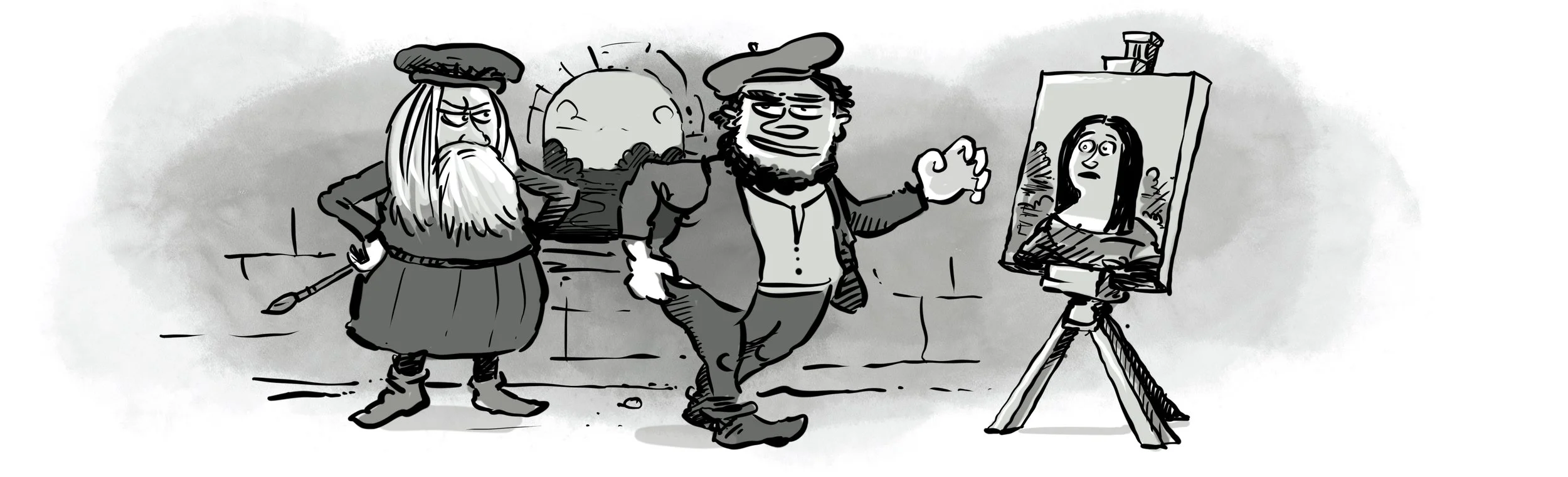
On occasion clients can show you the thing that you drew for them and say "look, I ran it through AI to ‘make it better’’. This is problematic for three reasons. Firstly almost all illustrators now have an ‘No AI’ clause in their contracts where they ask for their work not to be put into AI systems. Secondly the output, certainly in the UK and US, is not copyrighted - no one owns it. So it is sort of useless in IP terms. Thirdly, it is extraordinarily rude. It's as if Francesco del Giocondo had taken the Mona Lisa from Leonardo Da Vinci and wiped his bottom on it and then said ‘look I’ve made it better now’.
Understand what humans can bring actual creatively
Humans have emotional intelligence, personalities which give them a unique view on the world and arms and legs. The work you receive from a human will have had a lot of sentient thought dedicated to it and been physically made (yes an arm moving a mouse around counts). The problem solving, understanding of context and talent a human can bring to artwork naturally supersedes that of an AI.
When an AI receives a prompt to create an image it uses its processing power to do two things, it scours a dataset as it looks for imagery related to the prompt. It then compares images until it has something as close as it can create to the original request, using machine learning and various other software capabilities to merge imagery until it has something it thinks is right.
The essence of this is that it does not and cannot think.
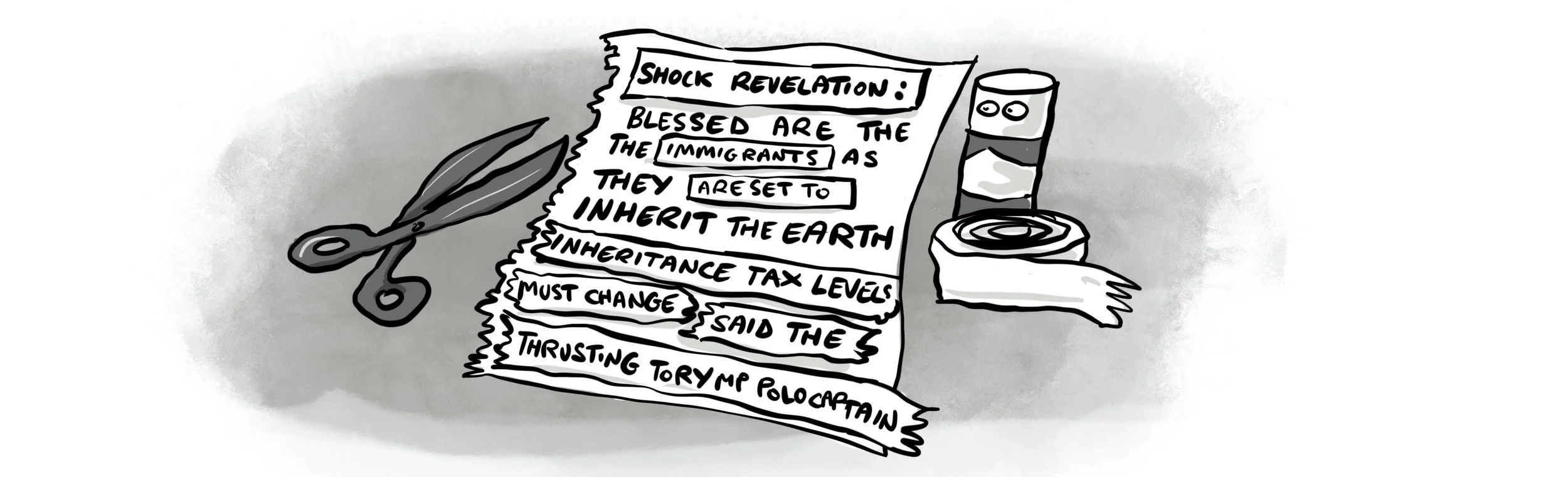
It is always a facsimile. Also none of the artists whose work resides in that dataset got paid for it. So when a piece of AI slop is presented and a request is made to ‘do it a bit like this’ it’s somewhat galling. As if someone took a copy of the Bible, a Daily Mail and a Jilly Cooper novel, cut them up and then randomly stuck them back together with a pritstick like a demented ransom note and then said to Shakespeare ‘can you do it like this’. It would, in fairness, still be infinitely more creative than whatever came out the back end of an AI.
Revisions are not like typing prompts
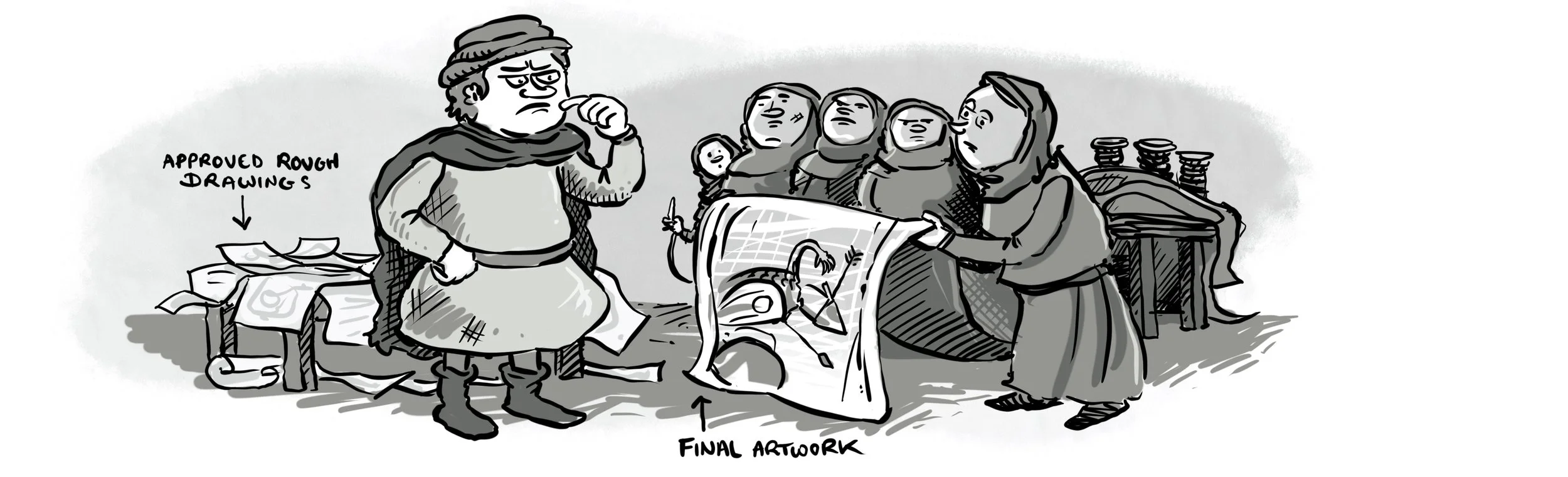
When you have successfully engaged an illustrator it's important to remember that they will have a process. Typically it involves taking a brief, coming up with a rough impression of what the image will look like, and then doing a lovely neat final one. Happily from the commissioners point of view they can discuss the brief, get on with their life, and then be delighted with whatever they end up with because all along the way there have been checks and balances to make sure we all got to the right place. But when you are prompting midjourney, Dall-e or Nano Banana Pro not only can you utterly disrespect them - as they have no actual emotions - but you can tell them to just do it again over and over again. The problem is they will regurgitate robotic slop that, as we discussed earlier, is a facsimile of stolen work, and also regular people on the street will automatically hate it the minute they realise it's been made by an AI. It’s important to remember this process does not work with humans. They need time and respect. Humans do share the impulse to create great work. You didn’t get Bishop Odo saying ‘do it again but more realistic’ when he saw the Bayeux Tapestry for the first time.
Here are some DO’s
Work with your illustrator to evolve the brief, and a good illustrator will challenge it in a creative way
Set clear sign offs & feedback rounds throughout the project - this means everything stays on course throughout
Be upfront about budget, time & usage - all of these are critical factors in finding a fair price for the work
Agree file types and sizes in advance ie. print, web, socials etc
Have a proper contract - typically the illustrator will have one for you to sign
Remember there will be ‘kill fees’ and a ‘No AI upload’ clause in the contract
Let them do their thing - they are the artist
Remember that the final artwork, with the licence that grants you usage rights, is considerably more valuable than something generated by a robot
We have many years of experience guiding our clients through these steps and even in the world of AI these fundamentals hold true.